Professional Lawn Fertilization in Elgin, IL
Proper lawn fertilization and weed control are the foundation of a healthy, thick lawn that looks great from spring through fall. In Elgin, Illinois, our cool-season grasses — Kentucky Bluegrass, Tall Fescue, and Perennial Ryegrass — are heavy feeders that demand consistent nutrition throughout the growing season. Without a structured fertilization program, turf thins out, loses its color, and becomes vulnerable to weed invasion, disease, and insect damage. A well-fed lawn, on the other hand, grows thick enough to crowd out weeds naturally and recover quickly from summer heat stress.
Elgin sits in USDA Hardiness Zone 5b, where the soil conditions present unique challenges for turf nutrition. Kane County soils are predominantly clay-based, which means they hold moisture well but can be compacted, poorly drained, and often deficient in the organic matter and nutrients that grass roots need to thrive. These conditions make it essential to apply the right fertilizer, in the right amount, at the right time of year. A generic bag of fertilizer from the hardware store does not account for any of that — and applying the wrong product at the wrong time can actually damage your lawn rather than help it.
Elite Elgin Lawn Care provides comprehensive lawn fertilizer service programs that address every aspect of turf nutrition and weed management. Our programs include seasonal fertilization applications timed to the growth cycle of cool-season grasses, pre-emergent and post-emergent lawn weed control treatments, preventive grub control, and soil testing to identify exactly what your lawn needs. Whether you are trying to restore a thin, weedy lawn or maintain a property that already looks good, we build a custom program around your turf's specific requirements.
Lawn Fertilization & Feeding Programs
Effective lawn fertilization is not a single application — it is a season-long program that delivers the right nutrients at the right time based on how cool-season grasses grow in Zone 5b. Our lawn feeding programs are structured around five key application windows that align with the natural growth cycle of the turf in Elgin and the Fox Valley region. Each application is formulated to address what the grass needs during that specific phase of development.
Early Spring (April)
As soil temperatures rise above 50 degrees Fahrenheit and the grass breaks dormancy, we apply a slow-release nitrogen fertilizer to kick-start spring growth. This first application provides steady nutrition over several weeks without forcing a flush of excessive top growth that would stress the root system. The goal is to support healthy green-up while the root zone is still reestablishing itself after winter dormancy.
Late Spring (May - June)
The late spring application delivers a balanced NPK formula — nitrogen for leaf growth, phosphorus for root development, and potassium for overall stress tolerance. This application is paired with a pre-emergent herbicide to prevent crabgrass and other annual grassy weeds from germinating as soil temperatures climb into the range where weed seeds become active. Timing this application correctly is critical, and we monitor local soil temperature data to ensure the pre-emergent goes down before the germination window opens.
Summer (July - August)
During the heat of an Elgin summer, cool-season grasses naturally slow their growth and enter a period of stress. We apply a lighter feeding during this window — just enough to maintain color and support the plant without pushing growth that the root system cannot sustain in high heat. This application also includes potassium to improve drought tolerance and disease resistance during the most stressful months of the year.
Early Fall (September)
This is the most important lawn fertilization application of the entire year for cool-season grasses. As temperatures cool and the turf enters its second major growth phase, we apply a heavy nitrogen feeding that drives aggressive root development, tillering, and thickening. Fall fertilization is when your lawn builds the foundation for next spring's performance. A lawn that receives a strong September feeding will green up faster, grow thicker, and resist weeds far better than one that was only fertilized in spring.
Late Fall (November)
The winterizer application goes down after the last mowing of the season, when the grass has stopped producing new leaf growth but the root system is still actively absorbing nutrients. This final lawn feeding promotes root energy storage that the plant draws on for early spring green-up. Lawns that receive a proper winterizer application in November come out of dormancy noticeably faster and greener than lawns that go into winter without it.
Every lawn fertilizer service program we design begins with a thorough assessment of your property and, when needed, soil testing to determine the exact nutrient profile of your turf. Soil pH, nitrogen levels, phosphorus availability, and organic matter content all influence which products we use and how much we apply. We offer both granular and liquid application methods depending on the product and the condition of the turf — granular for slow-release base nutrition, liquid for fast-acting targeted treatments. This data-driven approach ensures your lawn receives precisely what it needs without over-application or waste.
Lawn Weed Control & Weed Removal
Weeds are more than an eyesore — they compete directly with your grass for water, sunlight, and nutrients. A comprehensive lawn weed control program attacks the problem from multiple angles, combining prevention, targeted treatment, and cultural practices that make your turf inhospitable to weed growth. Elite Elgin Lawn Care uses an integrated approach that addresses both grassy and broadleaf weeds throughout the entire growing season.
Pre-Emergent Weed Control
The most effective way to deal with annual weeds is to stop them before they ever appear. Our pre-emergent yard weed control applications create a barrier in the top layer of soil that prevents weed seeds from germinating successfully. We apply pre-emergent herbicides in early spring, timed precisely to soil temperature thresholds, to target crabgrass, foxtail, goosegrass, and other annual grassy weeds that plague Elgin lawns every summer. A second pre-emergent application in late spring extends the protection window through the peak germination period. When applied correctly and on schedule, pre-emergent treatment eliminates the vast majority of annual weed pressure before it ever becomes visible.
Post-Emergent Weed Treatment
For weeds that are already growing in your lawn, we use selective post-emergent herbicides that target broadleaf weeds without harming the surrounding turf. Common broadleaf weeds in Elgin include dandelions, white clover, creeping charlie (ground ivy), thistle, plantain, and henbit. Our technicians identify the specific weed species present on your property and select the most effective product for each one. We offer both spot treatment for isolated weed patches and broadcast application for lawns with widespread weed pressure. Spot treatment is precise and minimizes chemical use, while broadcast application is more efficient when weeds are scattered across the entire lawn.
Integrated Weed Suppression
Herbicides are an important tool, but the most effective long-term weed removal strategy is a thick, healthy lawn. Dense turf shades the soil surface, preventing weed seeds from receiving the sunlight they need to germinate. It also outcompetes any weeds that do manage to sprout, starving them of water and nutrients before they can establish. That is why our weed removal service is always paired with a proper fertilization program — you cannot win the weed battle without first building strong, vigorous turf. Proper mowing height, consistent fertilization, core aeration, and overseeding all contribute to a turf density that naturally suppresses weed growth year after year.
Garden Bed Weeding
Weeds do not stop at the edge of your lawn. Landscape beds, garden borders, and hardscape joints are all common areas where weeds take hold and spread back into the turf. Elite Elgin Lawn Care offers garden weeding as an add-on service to complement your lawn weed control program. We manually remove weeds from beds and borders, apply pre-emergent granules to suppress regrowth, and refresh mulch where needed to maintain a clean, weed-free appearance across your entire property. Keeping your garden beds weed-free eliminates a major source of weed seeds that would otherwise blow or wash into your lawn.
Grub Control in Elgin, IL
White grubs — the larval stage of Japanese beetles, European chafers, and June bugs — are among the most destructive lawn pests in the Elgin area. These C-shaped larvae live in the soil just below the root zone of your grass, feeding on the roots and severing the turf's connection to water and nutrients. A grub population of 10 or more per square foot can destroy a healthy lawn in a matter of weeks, turning thick green turf into brown, dead patches that pull up from the soil like loose carpet.
The signs of grub damage are distinctive once you know what to look for. Brown patches that appear in late summer or early fall — particularly in well-watered lawns — are a primary indicator. If you can grab a handful of the brown turf and peel it back easily, like rolling up a rug, the root system has been severed by grubs feeding below. Another reliable sign is increased activity from raccoons, skunks, or birds digging in your lawn, as these animals feed on grubs and will tear up turf to reach them. You may also notice a spongy, soft feel underfoot in areas where the root system has been compromised but the grass has not yet turned brown.
Elgin is located in a high-grub-activity zone across the northern Illinois and Fox Valley region. The combination of irrigated residential lawns, clay soils that retain moisture near the surface, and large populations of adult beetles creates ideal conditions for heavy grub infestations year after year. For this reason, we recommend preventive grub control as a standard part of every fertilization program rather than waiting for damage to appear before treating.
Our preventive grub control application is applied in June or July, before adult beetles lay their eggs and before newly hatched larvae begin feeding. The product remains active in the soil for several months, killing young grubs as they emerge and begin to move toward the root zone. For properties that already show signs of active grub damage, we offer curative treatments in September and October that target larger, established larvae. Curative products work best when grubs are still actively feeding near the surface before they burrow deeper into the soil for winter. Early detection and timely treatment are critical — the longer grub damage goes unaddressed, the more expensive and time-consuming the lawn restoration becomes.
Why Elgin Lawns Need Professional Fertilization
The soils throughout Kane County and the Fox Valley present challenges that generic, off-the-shelf fertilizer products are not designed to address. Elgin's clay-heavy soils are often compacted, poorly aerated, and low in organic matter. They tend to lock up phosphorus and micronutrients, making them unavailable to grass roots even when present in the soil. Without a soil test and a targeted application strategy, homeowners frequently over-apply some nutrients while leaving critical deficiencies unaddressed. The result is a lawn that responds inconsistently — short bursts of green followed by thinning, yellowing, and increased weed pressure.
Cool-season grasses are heavy feeders by nature. Kentucky Bluegrass, which makes up the majority of residential lawns in the Elgin area, requires between three and five pounds of nitrogen per thousand square feet per year to maintain optimal density and color. Tall Fescue and Perennial Ryegrass have similar nutritional demands. Meeting those demands requires not just the right amount of fertilizer, but the right formulation applied at the right time in the growth cycle. A single spring application of fast-release nitrogen — the most common DIY approach — creates a surge of top growth that burns through the plant's energy reserves and leaves it weakened heading into summer stress.
Professional-grade fertilizer products differ significantly from consumer retail options. The formulations we use feature controlled-release nitrogen sources that feed the turf steadily over six to eight weeks per application, rather than dumping all available nitrogen into the soil at once. They contain micronutrients like iron, manganese, and zinc that support chlorophyll production and disease resistance. And they are applied at rates calibrated to your specific lawn conditions based on soil test data, grass species, and the time of year. This precision approach produces measurable, lasting results: thicker turf density, deeper green color, significantly fewer weeds, and improved resilience to drought, heat, cold, and foot traffic.
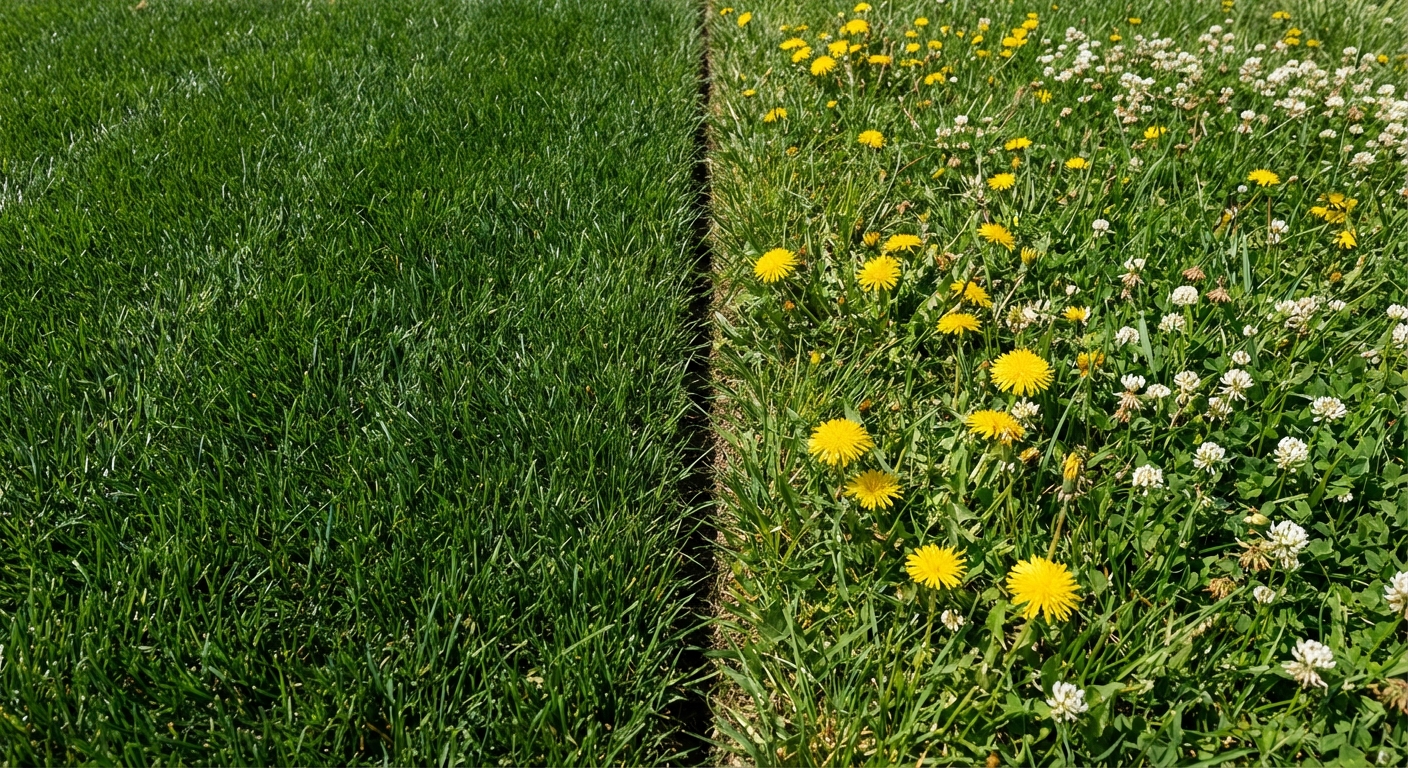
The difference between a professionally fertilized lawn and a DIY-maintained lawn is visible from the street. Consistent nutrition builds a turf canopy that is dense enough to shade out weed seeds, resilient enough to bounce back from summer stress, and healthy enough to resist disease and insect pressure without requiring excessive chemical intervention. A proper lawn fertilization program does not just improve how your lawn looks — it fundamentally changes how it performs.
Get a Free Fertilization Estimate
Every lawn in Elgin is different, and the right fertilization and weed control program depends on your soil conditions, grass type, current turf health, and your goals for the property. Elite Elgin Lawn Care provides free, no-obligation lawn assessments and custom program recommendations for residential and commercial properties throughout Elgin, IL and the surrounding Fox Valley communities. We will evaluate your lawn, discuss your concerns, and build a lawn fertilizer service program tailored specifically to your property — with transparent pricing and no hidden fees.
Get a Free Estimate